



Key Takeaways
- Federal law and most US states require only one participant's consent to record a phone call, not everyone's.
- Two states get mis-summarized in nearly every guide, in opposite directions. Nevada's statute reads as one-party consent, but the Nevada Supreme Court has ruled it applies even to your own calls. Oregon's all-party rule covers in-person conversations only, not phone calls.
- When a call crosses state lines, courts often lean toward the stricter state's law, but there is no single nationwide rule that settles every case.
- Hearing a company say "this call may be recorded" does not automatically give you the right to record your own copy. A clear statement that you are recording, followed by the other person staying on the line, is generally treated as valid consent on your end.
- This article explains the legal landscape as documented in federal and state statutes and court opinions. It is general information, not legal advice. For your specific situation, talk to an attorney licensed in your state.
The Basic Rule Almost Everyone Gets Right
Most phone call recording law comes down to one distinction: does the law require one participant's consent, or everyone's? Federal law and most US states side with one-party consent. Under the Wiretap Act, 18 U.S.C. § 2511, a party to the call can record it without telling the other side, and Justia's 50-state survey places roughly 38 states plus Washington, D.C. in this group.
A smaller group of states requires every participant's consent instead. This is often called two-party consent, though all-party consent is the more accurate term once a call has three or more people on it. Sources put this group at 10 to 12 states, since a few states get classified inconsistently, including the two edge cases below.
The Two States Nearly Every List Gets Backwards
Nevada and Oregon are the two states that trip up buyer-facing guides most often, and they trip up in opposite directions.
Nevada reads as one-party consent right on the statute. Nev. Rev. Stat. § 200.620 permits recording "with the prior consent of one of the parties," which looks like an ordinary one-party rule. But in Lane v. Allstate Ins. Co., the Nevada Supreme Court ruled that this statute applies even when you are recording your own phone call. In practice, Nevada functions as an all-party consent state, not the one-party state its statute's plain text suggests. A violation carries a category D felony, one to four years, under Nev. Rev. Stat. § 200.650.
Oregon gets mis-listed the opposite way. Or. Rev. Stat. § 165.540 requires everyone in an in-person conversation to be specifically informed before recording, and a lot of summaries stop reading right there and file Oregon under "all-party." But that specific rule covers in-person conversations only. Telephone and other electronic communications follow the ordinary one-party rule instead. As RecordingLaw.com puts it in its 2026 state guide, "most popular summaries get it backwards" on this exact point.
One state under-classified, one state over-classified, and both errors come from reading a headline rule without reading how it actually applies. If you take one thing from this article, it is that a quick statute skim is not the same as knowing how a state actually treats phone call recording.
What Happens When a Call Crosses State Lines
Courts often lean toward the stricter state's law when a call reaches into an all-party consent state, but there is no single controlling federal rule that decides every case.
The leading case is Kearney v. Salomon Smith Barney, Inc., 39 Cal.4th 95 (Cal. 2006). A Georgia-based firm, in a one-party consent state, recorded calls with its California clients without telling them. The California Supreme Court held that California's all-party consent law applied anyway, reasoning that California had what the court called an overriding interest in protecting its own residents' privacy.
"California's expectations and privacy interests in this context should not be defeated because an out-of-state business, unfamiliar with California law, may not know that its unilateral taping of a telephone call with a California customer violates California law."
Source: Kearney v. Salomon Smith Barney, Inc., 39 Cal.4th 95 (Cal. 2006)
The Reporters Committee for Freedom of the Press states the practical guidance the same way most attorneys do: when in doubt on an interstate call, assume the stricter state's law applies. That is not a guarantee. Courts have gone the other way in specific cases. It is simply the safer assumption when you cannot verify where the other party is calling from.
Does a Recorded Disclaimer Cover You Too?
Hearing a company say "this call may be recorded for quality and training purposes" does not, by itself, give you the legal right to record your own copy of that call.
That message is the company disclosing that it is recording. It is not consent flowing in your direction. The New York City Bar Association's Formal Opinion 2003-02 makes the underlying assumption explicit: because nearly every US resident has heard that exact disclaimer on customer service calls, people reasonably assume an undisclosed personal or business conversation will not be recorded unless they hear similar notice.
What does work in your favor is a clear statement of your own. Multiple state bar opinions, including the Wisconsin State Bar's 2024 ethics opinion, treat continued participation after you announce that you are recording as valid consent on your end, satisfying even an all-party consent requirement. A generic company notice does not do this work for you. Your own clear statement does.
How Seriously Is This Actually Enforced
Penalties for unauthorized recording vary meaningfully by state, and the range runs from misdemeanor-level fines to multi-year felonies.
- Florida treats a violation as a third-degree felony under Fla. Stat. § 934.03: up to five years in prison and a $5,000 fine, plus civil damages of at least $1,000 or $100 per day under a separate provision.
- California treats a first offense under Penal Code § 632 as a "wobbler," chargeable as a misdemeanor or felony depending on the circumstances, with a fine up to $2,500 and up to one year in jail. A subsequent violation raises the fine to $10,000.
- New Hampshire downgrades the charge from a felony to a misdemeanor specifically when the person recording was a party to the call or had one party's consent, which covers most ordinary personal-use cases.
Real-world enforcement is a separate question from legality, and it depends on the specific facts and the prosecutor, not on the statute alone. Neither "it's never enforced" nor "it's automatically a felony" holds up as a blanket answer.
One Rule Without a State Exception
Federal law's one-party consent exception protects someone who remains an active participant in the call, and only for as long as they are actually on it.
Under 18 U.S.C. § 2511(2)(d), the exemption applies to a party to the communication. It does not extend to someone who was on the call earlier but has stepped away while a device keeps recording. This is a narrow but real limit, and it holds in every state, one-party or all-party.
The other point every source agrees on: recording a conversation between two other people, where you are not a participant and do not have anyone's consent, is not permitted in any US state. One-party consent laws let a participant record without telling the others. They do not let someone who is not on the call record it at all.
What This Means If You're Recording Your Own Calls
If you are recording calls you are a participant in, for a business record, a personal reference, or documentation you may need later, the practical steps are straightforward. Know whether your state, and the other person's state if you know it, falls into the one-party or all-party group. Treat Nevada and Oregon as the two states worth double-checking rather than trusting a quick list. If either party is in an all-party state, state clearly that you are recording before the substantive part of the call begins.
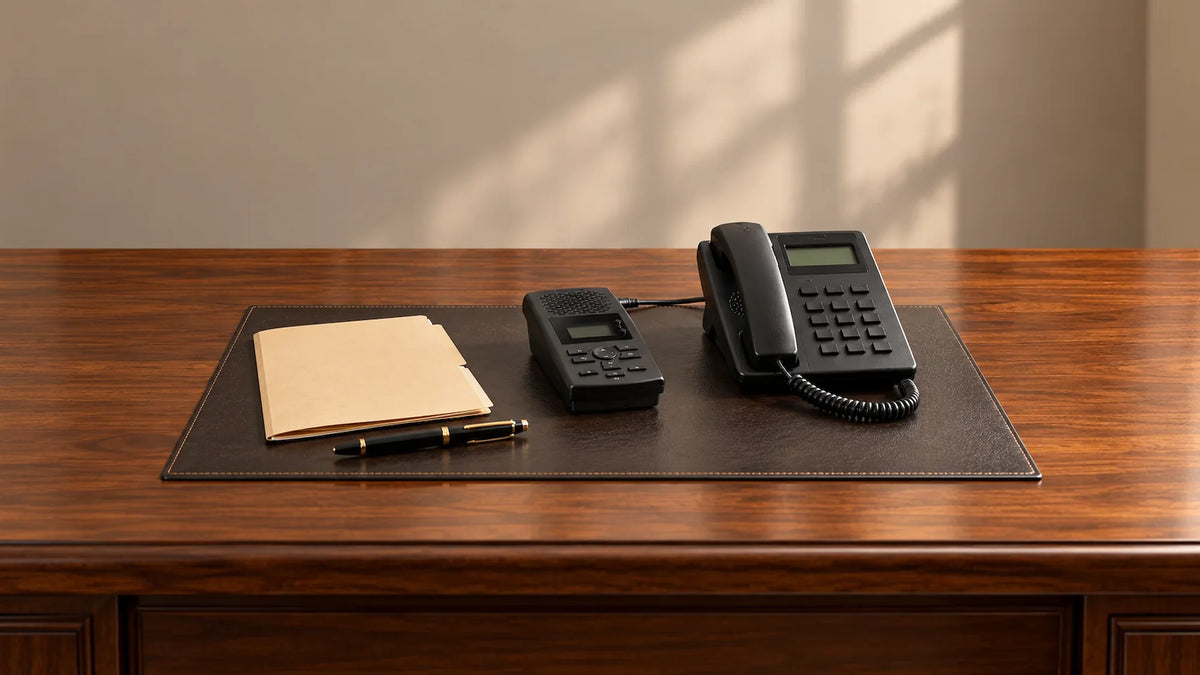
RecorderGear builds phone call recorders for people who are on the call and want a record of it. The PR200 Bluetooth cell phone call recorder pairs with a mobile phone for calls on the go, and our guide on how to record phone calls on iPhone walks through setup step by step. For a Bluetooth call recorder that starts and stops with the call automatically, browse our phone recorders; for a dedicated way to record landline calls at a home or small office desk, see the TR600 landline call recorder. Either way, the right hardware still depends on doing the consent step first. The device does not decide what is legal. You do, before you press record.
Frequently Asked Questions
Do I need the other person's permission to record a phone call?
It depends on your state. Most US states and federal law require only your own consent; about a dozen states require every participant's consent.
Is it legal to record a call between someone in a one-party state and someone in a two-party state?
Courts often apply the stricter state's law in this situation, following the reasoning in Kearney v. Salomon Smith Barney, but there is no single nationwide rule that decides every case. When you cannot verify where the other party is located, assuming the stricter state's law applies is the safer approach.
Does a company's "this call may be recorded" message let me record my own copy?
Not automatically. That disclaimer covers the company's own recording. If you clearly state that you are recording and the other person continues the call, that is generally treated as valid consent on your end as well.
This article is general information about US call-recording consent law as documented in federal and state statutes and court opinions. It is not legal advice. Recording laws are fact-specific and vary by state; for your specific situation, consult an attorney licensed in your state.